

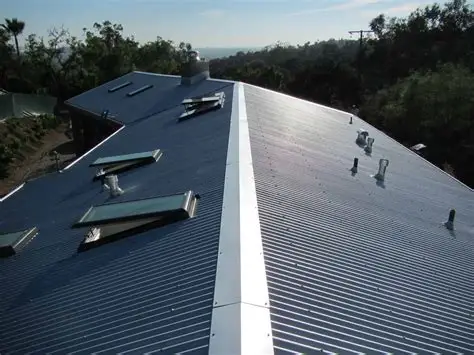
People who choose metal roofing usually expect the roof to be strong and reliable, especially during bad weather. After all, heavy rain and strong winds damage weak roofing materials very fast. However, corrugated metal roof panels are made with deep ridges and grooves, which enable them to remain strong even during severe storms. Due to their unique form, the panels distribute the pressure evenly over the whole surface. That is why they are less likely to get bent or broken under stress.
Actually, many current metal roofing products are experimentally verified to satisfy the wind requirements (both speed and duration). The Metal Construction Association cites records that corrugated metal roof panels, which are properly fixed and installed, can withstand winds of up to 140 miles per hour (approx. 225 km/h) or even more depending on the production and fastening scheme. This is why they are commonly employed in the storm-prone or windy regions of high seasonal winds.
Clever Design Facilitates Fast Rainwater Runoff
Excessive rainfall is the source of major headaches for most property owners. When water remains on the roof surface for a long time, leaks or breakdown of the structure might occur. Yet, due to their sinusoidal form, corrugated metal roof panels direct water naturally downward. A channel is formed by each ridge to direct the water flow toward the gutter and drain.
Furthermore, metal roofing is a lot smoother than traditional shingles. Because of this smoothness on the surface, the rainwater will run off faster and it won’t be easy for water to collect in one place. According to the information issued by the U.S. Department of Energy, sloped metal roofs are capable of giving rainwater a better shedding than many broken or flat roof materials. This means that the risk of water pooling or seepage is minimal.
What is more, quite often the installers put on layers of protective sealants and waterproofing membranes underneath the panels. For that reason, no matter how long the rain lasts, the inside of the building will stay dry and safe.
Strong Fastening Systems Keep Panels Secure
The thing that causes most wind damage to roofs is the loosening or lifting of the roofing materials from their base. That said, corrugated metal panels are hung using heavy-duty screws and fastening systems that hold them very tightly to the roof deck. Since the screws go through the ridges, they keep the panels steady.
On top of that, new installation methods have the edges of the panel overlapping. This overlap is a tight seal that lessens the number of openings through which wind can blow your roof away. And it has been found that proper nail spacing and overlapping of panels can significantly improve the performance of a roof against winds, based on a study from the National Roofing Contractors Association. Hence, a good installation is one major factor for performance in the long run.
Also, metal roofing is much lighter than some of the ordinary roofing materials. So, less stress is put on the structure during high winds, thereby increasing safety.
Durable Materials Resist Rust and Weather Damage
Besides wind and rain resistance, durability also matters in long-term roof performance. Fortunately, corrugated metal roof panels are usually coated with protective layers such as zinc or special paint finishes. These coatings help prevent rust, corrosion, and wear caused by moisture.
Additionally, metal roofing expands and contracts slightly with temperature changes. However, its flexibility allows it to handle these shifts without cracking. As a result, the roof continues to perform well across different seasons.
A Reliable Roofing Option for Storm-Prone Areas
Overall, corrugated metal roof panels provide dependable protection against heavy rain and strong winds. Their rigid design helps water flow smoothly, while strong fasteners keep panels securely attached. Moreover, protective coatings increase durability and reduce maintenance needs over time.
Therefore, when homeowners or builders look for long-lasting weather protection, metal roofing stands out as a trusted choice. Not only does it handle extreme conditions well, but it also supports long-term safety and peace of mind for modern buildings.